Normal
0
false
false
false
EN-US
X-NONE
X-NONE
/* Style Definitions */
table.MsoNormalTable
{mso-style-name:”Table Normal”;
mso-tstyle-rowband-size:0;
mso-tstyle-colband-size:0;
mso-style-noshow:yes;
mso-style-priority:99;
mso-style-parent:””;
mso-padding-alt:0in 5.4pt 0in 5.4pt;
mso-para-margin-top:0in;
mso-para-margin-right:0in;
mso-para-margin-bottom:10.0pt;
mso-para-margin-left:0in;
line-height:115%;
mso-pagination:widow-orphan;
font-size:11.0pt;
font-family:”Calibri”,sans-serif;
mso-ascii-font-family:Calibri;
mso-ascii-theme-font:minor-latin;
mso-hansi-font-family:Calibri;
mso-hansi-theme-font:minor-latin;}
how or when bad things happen, and can’t even predict, plan for or fight
against them. But we do have the Liberty
of how to respond to bad things when they do happen. And, when it comes down to it, that can be
one of the most important Liberties of all.
bad things happen, we can choose to be and remain angry, hold grudges and see
ourselves as victims. But this only
allows the bad things to control us. For
example, how many of us know people like my wife’s and my friend who became
blind at an early age? But she has
adapted, and there is no anger in her.
Instead she has become a wonderful and loving companion to her
husband. She dresses herself, cooks and
entertains, travels and leads the best life possible for her – and always with
grace and good humor. She could have
chosen to complain, but that would have only kept her (and the people around
her) from being happy. Liberty means
choices, and this wonderful lady has chosen well. To put it another way, no one can take ever take
away our spirit, at least not without our acquiescence. We could call our friend a hero, but she
would simply respond that she chose the best of the options available. I wish there were more people like her, and
also hope I would have used my Liberty of choice to have done the same had I
been in her position.
Normal
0
false
false
false
EN-US
X-NONE
X-NONE
/* Style Definitions */
table.MsoNormalTable
{mso-style-name:”Table Normal”;
mso-tstyle-rowband-size:0;
mso-tstyle-colband-size:0;
mso-style-noshow:yes;
mso-style-priority:99;
mso-style-parent:””;
mso-padding-alt:0in 5.4pt 0in 5.4pt;
mso-para-margin-top:0in;
mso-para-margin-right:0in;
mso-para-margin-bottom:10.0pt;
mso-para-margin-left:0in;
line-height:115%;
mso-pagination:widow-orphan;
font-size:11.0pt;
font-family:”Calibri”,sans-serif;
mso-ascii-font-family:Calibri;
mso-ascii-theme-font:minor-latin;
mso-hansi-font-family:Calibri;
mso-hansi-theme-font:minor-latin;}
2012 Libertarian candidate
for Vice President,
President

Normal
0
false
false
false
EN-US
X-NONE
X-NONE
/* Style Definitions */
table.MsoNormalTable
{mso-style-name:”Table Normal”;
mso-tstyle-rowband-size:0;
mso-tstyle-colband-size:0;
mso-style-noshow:yes;
mso-style-priority:99;
mso-style-parent:””;
mso-padding-alt:0in 5.4pt 0in 5.4pt;
mso-para-margin-top:0in;
mso-para-margin-right:0in;
mso-para-margin-bottom:10.0pt;
mso-para-margin-left:0in;
line-height:115%;
mso-pagination:widow-orphan;
font-size:11.0pt;
font-family:”Calibri”,sans-serif;
mso-ascii-font-family:Calibri;
mso-ascii-theme-font:minor-latin;
mso-hansi-font-family:Calibri;
mso-hansi-theme-font:minor-latin;}
of the week: “Doing what you like is Freedom.
Liking what you do is happiness.”
Frank Tyger
the way, these columns are now on Facebook and LinkedIn at judgejimgray,
Twitter at judgejamesgray, and wordpress at judgejimgray@wordpress.com.
Please visit these sites for past editions, and do your part to spread the word
about the importance of Liberty!
from Blogger https://ift.tt/2pi7Sjz
via IFTTT
from WordPress https://ift.tt/2pgkXK4
via IFTTT


 Recently at the annual California Libertarian Convention, a friend of mine gave me a copy of The Haiku Economist, which she had helped to edit. In this work, author Jim Cox gives us 101 poems he wrote in the Haiku form that discuss economic principles. Of course, Haiku is an ancient form of Japanese poetry that uses three lines, with five syllables in the first and third lines, and seven syllables in the second. As most people would agree, it is certainly unusual to summarize economic principles at all, much less in 17 syllables. But, amazingly enough, Cox is successful. So, regretfully if not tragically, since economics is understood by few people, much less our younger generations, I hereby impart the existence of this book to our “2 Paragraphs” family, along with the continuing request that we all share it with others, particularly students.
 According to the Prison Policy Initiative, on any given day there are about 630,000 people confined in local jails around our country and, of those, 443,000 are in pre-trial confinement. That is 70 percent! And why are they in custody before trial? Yes, because some are considered either to be dangerous to others or a flight risk, but the strong majority stay confined because they don’t have access to enough money to make bail. What difference does that make? Tragically, many of them will unnecessarily lose their jobs, which means that their families will not be able to make their rent payments which, in turn, frequently contributes to the break-up of families. The law says that there are only two factors in determining whether people should be held in custody before trial. The first is whether they likely will appear at court for their trial, and the second is whether, in the meantime, they are a threat to other people. Straightforwardly, and speaking from first-hand experience, judges live in fear of releasing someone who then goes on to harm witnesses or other people. So is the answer never to release anyone? Well no, not only is that not Constitutional or even fair, it is also impractical because we don’t have the jail space. So this puts us into a situation in which risks must be assessed. So is money a good indicator of either of these two issues? Not really. The main indicators instead are the type of charges that people are facing, and whether they have close ties to the community, such as a job, a family with children in school, and the person’s past history of convictions and/or failures to appear in court.
 Without the rights of everyone being enforced, no one’s rights can really exist. In that regard, it is important to understand that our country is not a Democracy, which was defined by Benjamin Franklin as two wolves and a lamb voting upon what to have for dinner. No, we are a Republic, where the rights of lambs can be protected. And how can our rights best be protected? We must have institutions which are based upon the Rule of Law and which enshrine our Liberty.
 I am proud to say that my Father remains one of my biggest heroes. As an example, a long time ago when I was a prosecutor and he was a judge in the Los Angeles Federal Courthouse, I would continually see him not only greeting the custodians in the hallways, but even asking about their children – all by name! And they would literally glow in response. It was not his way to speak to me about things like this, instead he led by example. So I started doing the same thing. Amazingly enough, the first time I did this was to the custodian who was cleaning my office. When I greeted him by name, which I knew from the label on his shirt, he literally stopped in his tracks. Then told me that he had been working here for ten years, and I was the first attorney ever to address him by name. The irony of this was that I eventually learned that he was the father of one of the stars on the UCLA Basketball team. So that was my unneeded tangible reward for treating people as people.
 One of the most flaming breaches of contract I know about is still being perpetrated by our own federal government (namely, by us all) upon some of our military Veterans. For example, it is estimated that about 30 percent the homeless population both in Los Angeles and Orange Counties are Vets. And the statistics for Veterans committing suicide are similarly disturbing. There must be a connection! But the problem is that today that, although Veterans are formally entitled to receive healthcare services, a myriad of obstacles are put in their way before that is realized. That simply must be changed! Being in war creates many scars, many not visible, and those conditions can result in almost permanent disabilities.
 Where Liberty is not connected with accountability, the results can turn ugly. For example, in a study about how people act first when they can be identified as opposed to anonymously, some observations were made on the same people first when they were on an elevator and then later when they were driving their cars. While on the elevator, most would say “After you,” and the responses would be “No, after you.” But when the same people were driving their cars, and thus anonymous, they would normally try to cut off the other drivers. That’s what anonymity can do. To sum up this thought, the great UCLA Basketball Coach Johnny Wooden put it best by saying that “Your reputation is the way others perceive you, but your character is how you act when no one else is looking.” Under this definition, we all know that some people’s character when they have the Liberty to act anonymously can be ugly.
 As has been affirmed numbers of times during this series, a Free Society must not count upon “good people” to ensure Liberty and good results for its members. Why? Because we can neither count upon those good people always to do the right thing or, even if we could, we cannot count upon having a continuing succession of good people to replace them. So a free society instead must rely upon the “Rule of Law.” But what does that mean? It means that, although they don’t have to be perfect, the same rules must apply to everyone. But where there are exceptions, whether based upon wealth, power, “holiness” or fame, the Rule of Law collapses.
 Among the most broadening things a person can do is to read and to travel. Reading allows the reader to be anyone, experience anything, and go anywhere at any time – past, present or future. Traveling shows that everywhere is not planned like the City of Irvine but, nevertheless, people can be happy in other places. And, conversely, it can make the travelers appreciate the places that they live much more. But why stop there? We can learn about and even visit totally different and exciting places, such as the world underwater, crystals and microscopic life and astronomy. The list of exciting subjects is endless. So don’t sit back and wait until you “have the money” or “have the time,” do it now! And show this by example to your children and grandchildren – or, better yet, take them with you!
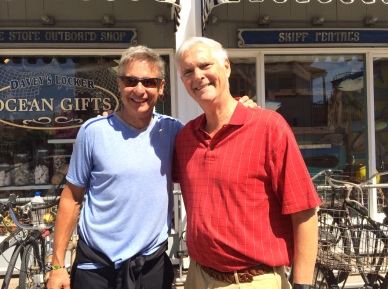 There is a store in Westminster, California that provides really good hour-long massages for $25. But for many years I have purchased from them a book of coupons for ten massages for the price of nine. Here, of course, the buyer and seller have the Liberty to make this deal or not. So let’s ask some questions about why both of us would benefit from this deal in which I am paying and they are receiving $2.50 less for each massage.
 Liberty means that we have choices. In fact, in our great country it is enshrined in our Declaration of Independence that we have the ability to pursue happiness but, as Benjamin Franklin famously said, we have to catch it on our own. And this same reality exists regarding one’s belief in fate, which can lead to feelings of entitlement and defeat, as opposed to choices, hard work and sacrifice, which can lead to gratification and victory. (Remember that Hitler lost a “gimmie” of European domination because he believed he was fated to set up a Thousand-Year Reich, whereas Churchill saved the world with his positive attitude of Blood, Toil, Tears and Sweat – and Victory!)
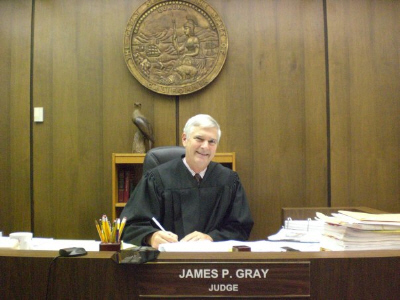 In my county we implemented what we call Peer Courts, which submit real juvenile delinquency cases to local high school jurors. The jurors question the subject and also his or her parents about the offense and the overall situation, retire to deliberate, and then recommend a sentence to a real judge who then imposes it. (Often the judges make some modifications, because frequently these jurors can be pretty tough.) But the beauty of this program is that, if the subject completes the imposed sentence within the next four months, the underlying charges are then dismissed and the subject will have no criminal record (this is what we call a “diversion” program).
 Okay, I agree that this is longer than 2 Paragraphs, but enclosed is an article that I published Friday, January 12, 2018 in the Orange County Register about reforming our nation’s tax and welfare systems, and instituting a Safety Net.
 Our nation has been fighting the so-called War on Drugs for decades. And what do we have to show for it? At least $1 trillion spent; we lead the world in the incarceration of our people; a major loss of our civil liberties; all illicit drugs being plentifully available both for us and our children (and we can’t even keep them out of our prisons!); juvenile street gangs not only prospering by selling illicit drugs, but also using their sales as a recruiting tool; large numbers of mentally ill people being jailed for self-medicating to stave off their demons; and the loss of more money from our shores than for any other reason except oil. And now our present Attorney General wants to “double down” on everything that has been shown not to work. The answer to that attempt must be No!
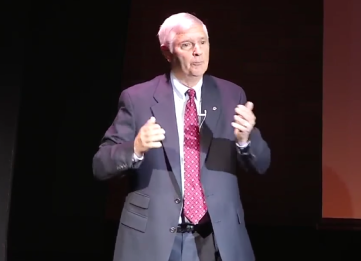 When I was a small child my parents continually drummed into my head: “Jimmy, if you get lost what will you do?” Answer: “I will find a policeman, he’s my friend.” Tragically that probably isn’t taught much anymore. Nevertheless, being a police officer is a noble calling – in fact, the police should be seen as the epitome of public servants. But we should insist that, just as surgery is the last option for a medical doctor, an arrest should be the last option used by the police. Why? Because bringing someone into the criminal justice system is really easy, but getting them out is often truly difficult. And that involvement can leave lasting and often unnecessary damage to a person’s ability to get a job and otherwise lead to further involvement in crime. So we should have an environment in which we trust and partner with the police as they protect and serve us! In that atmosphere, the police will protect both our safety and our freedoms, and thus be pillars for Liberty.
 Talk about an emerging and present threat to Liberty? Today the city of Guiyang, China has state of the art artificial intelligence facial recognition cameras in its surveillance system city wide. So with that technology they can, combined with photographs of every person in the city in their database, track the movements of everyone virtually anywhere in their city. And they can store the information in their memory banks for a week! Enclosed is a video of a reporter from the BBC showing us how that system works. As you can see, with the reporter’s photograph in the system, it took only seven minutes for the police to detect and detain him.
 I have just finished reading “Bonhoeffer: Pastor, Martyr, Prophet, Spy” by Eric Metaxas. The book is superb. It is about Dietrich Bonhoeffer, who was a pastor of the “Church of Luther” during the rise and reign of Hitler’s Nazi Germany. This man of Christ conducted a principled fight against what Hitler and the corrupted Church of Germany were doing, and eventually was imprisoned and executed for his efforts and beliefs. But he was unafraid, because he was doing what knew his God wanted him to do. Regardless of our religious faith or beliefs, how many of us can genuinely say that we are standing up for our principles and Liberty for ourselves and others anywhere near to this degree? This is an inspirational book, and I strongly recommend it to anyone.
 News flash: We Think in Words. So if people do not understand the difference between (or among) different words, they do not understand many nuances or even concepts. For example, there are many dialects in the languages of the world that do not make a distinction between the word “stranger” and the word “enemy.” So if some unknown person were to stumble into a small village of people who did not understand that distinction, the stranger would automatically be their enemy. Imagine how much needless violence, or at least how many lost opportunities, has been caused simply by that reality. Over the years, I have found similar problems for people saying they advocate “legalizing” marijuana. I don’t favor that, because if you think of a legalized drug, think aspirin. Your 12 year-old daughter could buy a case of it at any pharmacy if she so chose. No restrictions on advertising, price, licensing or age of the buyer. So the connotation of legalizing a substance is that you don’t care if my children get hooked. But if you were to ask the question, “Would you like to strictly regulate and control for adults marijuana like wine?” the answer is increasingly Yes. It’s all in the nuances of the words, and it is also more accurate.
 War is not glorious! And with war, of course, comes coldly arbitrary destruction, deaths and serious injuries which, in turn, exact a lasting cost not only for combatants who sustain both visible and non-visible wounds, but also to many of the people who have been left behind. So war is devoutly to be avoided, if at all possible. Nevertheless, and even with those understandings firmly in mind, there are some values that must constantly be fought for. And foremost among those are our national safety and protecting our national interests, which vitally includes Liberty! But tragically – and realistically – there are and have always been people in power around the world who see a reluctance in others to go to war as a sign of weakness. And almost never can those people be appeased! So sometimes the threat of war, or even war itself, is necessary. But it is the sacred obligation of our national leaders only to pursue war when our core issues are truly involved.
+a.jpg)