Showing posts with label litigation. Show all posts

Monday, December 1, 2008

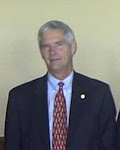
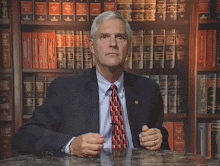
“THE COSTS OF LITIGATION” by Judge Jim Gray

“THE COSTS OF LITIGATION” by Judge Jim Gray 08/03/08

At the conclusion of most of my jury trials I tell the jurors that our system of justice is probably the most expensive, time-consuming and unwieldy that has ever been devised - but it is also the best. I also tell them that I hope they have received some gratification by contributing so substantially to it. By the end of their service the jurors almost universally agree with my assessment, and even say they look forward to further jury service in the future - although that feeling probably wears off soon for many of them.


But litigation is expensive. For openers, it costs $320 simply to file a civil lawsuit in California, and all defendants must also each pay a similar $320 appearance fee just for the privilege of appearing to defend themselves. Of course the primary cost to the litigants is for their attorneys, who sell their time, experience, wisdom, and information-gathering abilities. But there are also additional costs for paralegals, investigators, process servers, secretaries, electronic preparation and storage of documents and, of course, the “cottage industry” of expert witnesses.  


For personal injury cases many attorneys will often “front” the costs of the suit for the plaintiffs, and not charge them anything for their services unless and until there is a recovery from the defendants. But when there is a recovery, the attorneys are reimbursed for their costs, and also receive anywhere from one-third to two-fifths of the proceeds. The public benefit from this is that the contingency fees system allows good cases to be pursued by plaintiffs who otherwise could not afford to do so.


So when you hear about “large jury awards” in personal injury cases, remember that the litigation itself is expensive, and the risks of pursuing it can be large if not ruinous. And also remember that the contingency fee system provides some safeguards, because attorneys are inherently inclined not to pursue cases that have no merit, since they can lose a great deal of time and money if they do.


I am also happy to report to you that within the last decade our court system as a whole has become much more pro-active in reducing expenses and heading off problems. For example, we now assign most of our cases to a specific judge as soon as a case is filed. That way the litigants get an earlier perception about what the eventual results might be based upon pre-trial rulings. This also prevents a party from getting a second “bite at the apple” for the same losing arguments before a different judge. That results in the cases moving more quickly toward a resolution.


In addition, and all importantly, the individual judges tend to work harder if the cases belong to them because their back log will build up if they don’t - and it is true that judges and staff members quietly note who has a higher or lower inventory of cases. In other words, incentives matter in the courthouse as well as in the rest of the world. As a result of this new approach, we now dispose of about 80 percent of all of our civil cases within 12 months of their being filed, as opposed to about 48 months under the prior system.


Other pro-active programs have been established to reduce future crime, such as screening out defendants charged with alcohol-related offenses who are addicted to alcohol. Once these defendants are identified they are required to address and overcome their addiction problems, or they face additional punishments if they do not.  


Additional court screening attention and assistance are provided to juvenile offenders, defendants with mental disorders and dual diagnoses, people who are homeless, and parents who have neglected or mistreated their children. Furthermore, both drug courts and the passage of Proposition 36 by California voters in November of 2000 have materially reduced the recidivism rates for people using illicit drugs by forcing them both to address their substance abuse problems and to be more responsible for their own actions.


As a direct result of all of these programs, many defendants have turned their lives around for the better. Think of the crimes that are not committed, the victims who are not victimized, the police, prosecutors, defense attorneys, judges and jurors who do not have to investigate and litigate the offenses, and the reduced time and money that is wasted by the incarceration of the offenders. Also think of the families that are not forced onto welfare roles because of the incarceration of their breadwinner.  


A final significant reduction in the expenses of litigation has been our programs of mediation. These efforts have allowed the parties to “stop the bleeding” earlier by resolving their own problems through negotiation with the help of professional mediators. Many years ago when I was still an attorney it was generally considered to be a sign of weakness even to discuss the possible settlement of a case. But fortunately those days are now mostly behind us.


But the absolute best way of heading off problems and reducing the expenses of litigation is to avoid the litigation altogether by engaging in what I call “legal preventive maintenance.” Along those lines, my all-time favorite bumper sticker is “Become a doctor and support a lawyer.” Doctors are typically concerned about their patients, but they often are all too trusting and even naïve in their own business practices, and they mostly do not ask for help.


So I recommend people conduct inspections of their private and business property and look out for safety problems, and encourage their families and employees to be on the lookout for these problems as well. I also recommend that people get a good legal preventive checkup of all of their business activities.  


“Saving” money by failing to get competent preventive legal advice is a classic way of being “penny wise and pound foolish.” Why? Because litigation is expensive, both financially and psychologically. We in the court system are taking steps to reduce these expenses or avoid them altogether. You should too.

James P. Gray is a Judge of the Superior Court in California, the author of Why Our Drug Laws Have Failed and What We Can Do About It - A Judicial Indictment of the War on Drugs (Temple University Press, 2001) and Wearing The Robe - The Art And Responsibilities of Judging In Today's Courts, has a blog at http://judgejamesgray.blogspot.com/. http://www.judgejimgray.com, and can be contacted at www.judgejimgray.com.

ARE ATTORNEYS FRIENDS OR FOES? by Judge Jim Gray


ARE ATTORNEYS FRIENDS OR FOES? by Judge Jim Gray

04/20/08

Okay, yes I am a member of the legal profession, and yes I agree that our profession has some problems. But by and large I am proud of my profession, and I think it is time for me to stand up for it more vocally. So please permit me to pass along to you some thoughts as you consider what to think about attorneys and the legal profession in general.


In the first place, virtually all attorneys deal in disputes and other problem areas in our society. Today we litigate many disputes that involve deeply important and emotional issues, like who will have custody of children, who will be awarded sometimes large amounts of money from someone else, whether a candidate will be able to appear on a ballot or not, where the body of a loved one will be buried when the family members do not agree, whether a real estate development project has complied with all applicable laws, or whether a potentially life-saving medicine should be pulled from the shelves of stores. The reputation of those of us in the legal profession is inescapably affected by our being involved in those difficult disputes.


For those who work as plaintiffs’ attorneys in litigation, frequently their clients are not happy with them because plaintiffs often lose their cases. Or they are not satisfied with the eventual award, or, if they are, with the time it took to procure it. With regard to representing defendants in litigation, it is a fact that no one likes to get sued. At the very least it is expensive, aggravating and takes lots of time, and attorneys frequently charge a lot of money for their time and expertise.


So one way or the other, litigation attorneys usually have unsatisfied clients on their hands, and “it is always their attorney’s fault” (or the judge’s). And that does not even begin to discuss what people think about the attorneys on the other side of their cases. So, as I often tell people, we are in the “dissatisfaction distribution business,” and that is almost literally true. And that situation adversely affects our reputation.


Even the large remainder of attorneys who do not get involved in litigation mostly deal with unhappiness in one form or another. Think of those who deal with regulatory agencies and governments at all levels, and tax attorneys. Usually they deal with bad news - it is simply a question of how bad. And when negotiating contracts, leases and other agreements, it is the other side’s attorney that is trying to procure “unfavorable” terms at your expense. So as a natural result, people often equate the attorneys representing the other side with disaffection and even bitterness.


Nevertheless, I believe people innately understand what we are up against, and that there remains an inherent appreciation of the services we render. As an example to support that belief, one evening I was attending yet another fundraising event, and I found myself sitting next to a lady at dinner who found out that I am in the legal profession. Throughout the dinner she harangued me about how the “shyster lawyers” are responsible for all kinds of things that are wrong with our society. It was amazing and quite one-sided. Finally in despair by the time of dessert I tried to change the subject by asking her if she had any children. “Oh yes,” she exclaimed proudly, “and my oldest son is in law school!”


But let me pass on to you some additional points that maybe my dinner friend and even you might not be aware of as you ponder what you think about attorneys in our community. The first point is in response to those who feel that attorneys file too many frivolous personal injury cases. You might not be aware of this, but most of these cases are taken by plaintiffs’ attorneys on a contingency basis, which is to say that the attorneys only take a negotiated percentage of what is eventually recovered. That means that unless the plaintiffs recover an award of some kind, the attorneys receive nothing on the case. As a result, since the attorneys run the risk of working for free, and even paying for costs of the lawsuit out of their own pockets, a sizeable screening process takes place in deciding what cases are filed at all by attorneys.


Another thing that people are almost completely unaware of is that attorneys as a profession routinely donate thousands of hours of “pro bono” work, which is to say that they donate their time to worthy people and causes that otherwise could not afford them. Personally I am not aware of any other profession that comes close to that type of a contribution.


Further, the legal profession polices itself diligently, to the degree that 80 percent of the state bar’s budget is spent on disciplinary inquiries. If any active judge came close to treating people like “Judge Judy” does, or any attorney were to act as is portrayed in many movies or television shows, they would soon lose their licenses to practice law. And rightfully so.


Attorneys at least in California are also required to specify in a written and signed retainer agreement what the relationships are between them and their clients before they can represent those clients in almost any litigation. And before they can bring an action for unpaid fees, the attorneys must offer neutral arbitration to their clients or former clients.


In addition, please consider the following. In my view, there are really only two ways that we can maximize the safety of products in the marketplace and justice and the realization of our expectations in our relationships with each other. One of them is through our civil justice system, with all of its imperfections. But the other is to have even greater governmental regulation of everything we do. And no one I know wants the government to be involved with even more regulation. So maybe we should appreciate what we have a little bit more, along with continuing to use our best efforts to improve the system further.


So are attorneys your friends, or your foes? In my view, the more people are aware of the facts, the more they will understand that the legal profession is a basic, valuable and necessary part of dispute avoidance, dispute resolution and securing safety and peace in the land. As such, it should be genuinely respected for the contributions it makes for us all.

James P. Gray is a Judge of the Superior Court in California, the author of Why Our Drug Laws Have Failed and What We Can Do About It - A Judicial Indictment of the War on Drugs (Temple University Press, 2001) and Wearing The Robe - The Art And Responsibilities of Judging In Today's Courts, has a blog at http://judgejamesgray.blogspot.com/. http://www.judgejimgray.com, and can be contacted at www.judgejimgray.com.